What We Saw
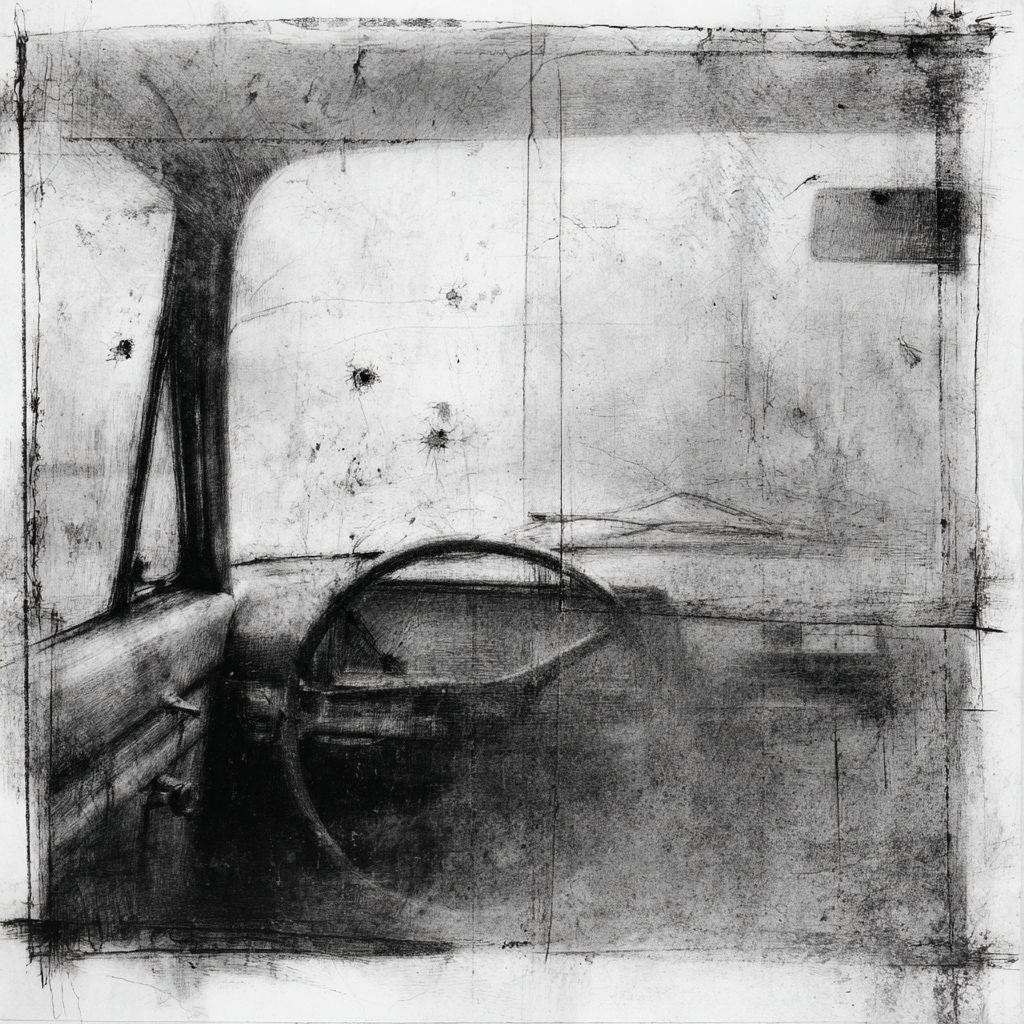
Renee Nicole Good was a poet. She won the Academy of American Poets Prize at Old Dominion University in 2020 for a poem about learning to dissect fetal pigs. She was a mother of three, a fifteen-year-old, a twelve-year-old, and a six-year-old boy whose father died in 2023. She moved to Minneapolis last year with her wife Becca to start over. Her mother described her as loving, forgiving, and affectionate. "She's taken care of people all her life," Donna Ganger told the Star Tribune.
On the morning of January 7th, 2026, Renee dropped her six-year-old at school. Twenty minutes later, she was dead, shot in the head by a federal agent while sitting in her car on Portland Avenue, three blocks from where George Floyd was murdered in 2020.
She was a thirty-seven-year-old mom.
Before we talk about politics or policy or the wars between parties, that fact has to sit with us for a moment. A woman is dead. Her children are orphaned. Her youngest will grow up without understanding why his mother didn't come home from dropping him off at school. This is not a statistic. This is not a talking point. This is the thing itself.
The video exists. You can watch it. Millions of people already have. Now there are multiple videos, including one filmed by the agent who killed her.
It shows ICE agent Jonathan Ross driving around Renee's SUV, the vehicle DHS later claimed was "blocking" agents, and stepping out with his phone recording. Ross circles her car, filming. Renee's wife Becca gets out and confronts him. As Ross walks past Renee's open driver's window, she says to him: "That's fine, dude. I'm not mad at you."
Seconds later, two more agents arrive. One yanks on Renee's door handle, screaming at her to "get out of the fucking car." Ross positions himself near the front-left of the vehicle. Becca yells, "Drive, baby, drive!" Renee's car begins to move forward, the steering wheel turned to the right, away from Ross. Still holding his phone in one hand, Ross draws his weapon with the other and fires three shots: the first through the windshield, the second and third through the driver's side door as the car passes him. The forensic analysis shows 399 milliseconds between the first and second shots. 299 milliseconds between the second and third.
Her car rolls forward and crashes into a parked vehicle. On Ross's own recording, a voice says "fucking bitch" as the SUV accelerates away. A man who identifies himself as a doctor tries to approach the wreck to render aid. Federal agents hold him back at gunpoint. Six minutes pass before firefighters arrive. Eight minutes after she was shot, Renee began receiving CPR.
Within hours of her death, the Secretary of Homeland Security called Renee Good a domestic terrorist. The President of the United States called her a "professional agitator" who "violently, willfully, and viciously ran over" an ICE officer. The Vice President wrote that her death was "a tragedy of her own making."
The video does not show Renee running over anyone. The agent who fired the shots was filmed walking normally moments after the shooting, still holding his phone, camera app still open. He was not under the car. He was not on the ground. He was standing, holding his weapon, very much alive.
Ross then got into his vehicle and left the scene before police or EMTs arrived. The New York Times reported that he and other agents drove off, "apparently altering the active crime scene."
Her wife's statement, released two days later, was nine words that said everything: "We had whistles. They had guns."
The Lies Matter
This is not a case of competing interpretations. This is not a matter of perspective or spin. The highest officials in the United States government are lying about evidence that every American can see with their own eyes. They are telling you that what you watched is not what happened. They are telling you to believe them instead of your own perception.
When a government lies to your face about video evidence, something has broken that cannot be repaired with a better policy or a more moderate candidate. This is not about immigration. This is about whether language means anything. This is about whether we live in a shared reality or whether reality is whatever the powerful say it is on any given day.
That is not a left-wing question or a right-wing question. That is a question about whether civilization continues.
History Rhymes
I want to be careful here. There are words that get thrown around, words like fascism, words like Nazi, words like authoritarian, and they have been thrown around so much that they've lost their power to alarm. The people I'm trying to reach have been told, repeatedly, that such comparisons are hysterical, that they're the province of coastal elites and campus radicals who call everything they don't like by the worst names they can think of.
So I'm not going to use those words. I'm going to talk about patterns instead.
Every nation that has lost its way had a moment, usually more than one, when the unthinkable became normal. Not because citizens approved of what was happening, but because they convinced themselves it wasn't that bad. The institutions would hold. Things would calm down. The fever would break.
In Argentina, the mothers of the disappeared marched in the Plaza de Mayo while their neighbors told themselves that the junta was restoring order and the missing had probably done something to deserve it. In Chile, Pinochet's supporters said the socialists had brought it on themselves. In Hungary, in the Philippines, in a dozen other countries that stumbled into darkness, there was always a moment when the warning signs were visible and the people who should have spoken chose silence because silence was easier.
Closer to home: In 1942, the United States government rounded up 120,000 Japanese Americans, most of them citizens, and put them in camps. They had committed no crimes. There was no evidence of sabotage or disloyalty. But the government said it was necessary, and the courts went along, and ordinary Americans looked the other way because it was wartime and these people were different and surely the authorities knew best. We now teach our children that this was a national shame. We put up memorials. We issued reparations. We promised never again.
The pattern is always the same. A group is identified as dangerous. The state claims extraordinary powers to deal with the danger. Citizens who object are told they are naive, or disloyal, or complicit with the enemy. And by the time enough people realize what is happening, the machinery of repression has become self-sustaining.
Governments that face no accountability for killing citizens in broad daylight become governments that kill more citizens. This is not speculation or metaphor. This is what has happened, over and over, in countries that thought it couldn't happen there. The rhyme is consistent. The pattern is legible. The only question is whether we recognize it while there is still time to change course.
American Values
There are things we used to agree on. Maybe we still do. Let's find out.
The state should not kill people who have committed no crime. Renee Good committed no crime. She was not the target of the ICE operation. She was a bystander, a neighbor, perhaps a witness. Even if she had been blocking traffic (which is, at worst, a misdemeanor), the penalty for a misdemeanor is not death by gunfire.
The government should not lie about video evidence. When officials describe events that contradict footage accessible to the entire public, they are not spinning or managing the narrative. They are attempting to replace reality with propaganda. This is something we used to associate with regimes we considered enemies of freedom.
Power must be accountable to law. The FBI has now seized the investigation and cut out Minnesota state investigators entirely. The people of Minnesota will have no independent means of establishing what happened to one of their citizens. The federal government will investigate itself and, presumably, clear itself. This is not accountability. This is impunity with a procedural veneer.
Citizens have the right to observe their government in action. Renee Good appears to have been acting as a legal observer, watching federal agents operate in her neighborhood, as Americans have done at protests and police actions for generations. The administration has labeled this "domestic terrorism." If watching the government is terrorism, then the First Amendment is a dead letter.
A mother's life has value. This should not need to be said. But when the Vice President of the United States tweets that a woman's death is her own fault, we have to say it: Renee Good mattered. Her children needed her. Her life was not forfeit because she was in the wrong place, or because she failed to comply fast enough, or because she held opinions that powerful people found inconvenient.
These are not progressive values or conservative values. They are the minimum requirements for any society that calls itself free. Anyone (left, right, or center) who cannot affirm these things has left the conversation. We proceed without them.
A Duty to Obstruct
The Vice President said Renee Good's death was "a tragedy of her own making" because she interfered with federal law enforcement.
Let's be very clear about what that argument means. It means that when the state acts, citizens must comply. It means the legitimacy of an action flows from the uniform, not from the law itself. It means obedience is the highest civic virtue.
This is not an American idea. It is the idea America was founded to reject.
The men who dumped tea into Boston Harbor were interfering with lawful customs enforcement. The conductors of the Underground Railroad were interfering with lawful fugitive slave operations. Rosa Parks was interfering with lawful segregation statutes. The students at lunch counters in Greensboro were interfering with lawful business practices.
Every single expansion of American freedom came because citizens looked at a law and said: This is wrong. I will not comply. And I will stand in the way.
This is not civil disobedience as a fringe tactic of radicals and hippies. This is the founding premise. The Declaration of Independence is a document about when resistance becomes not just permissible but obligatory. Jefferson did not write that we should politely petition King George and then comply with his soldiers. He wrote that when government becomes destructive of life, liberty, and the pursuit of happiness, it is the right of the people to alter or abolish it. That is the sentence that made us a nation.
The administration wants you to believe that "law enforcement" is a self-justifying phrase. That if agents wear badges and follow orders, the question of right and wrong is settled. But the whole American experiment rests on the opposite conviction: that laws can be unjust, that enforcement can be tyranny, and that citizens have not just the right but the duty to resist when the state oversteps its bounds.
Renee Good was watching. She was bearing witness. In some accounts, she may have been trying to slow down an operation that was terrorizing her neighbors. The administration calls this terrorism. The American tradition calls it conscience.
Not every act of resistance is wise. Not every confrontation is strategic. Reasonable people can disagree about tactics, timing, and risk. But the impulse itself, to stand between power and the powerless, to say "not here, not to my neighbors, not on my street”, that impulse is the reason this country exists. That impulse defeated the British, ended slavery, broke Jim Crow, and established the rights that even the people who now demonize protesters take for granted.
When the government tells you that compliance is your only acceptable response to its agents, it is telling you that you are no longer a citizen. You are a subject. And the 250-year American answer to that proposition has always been the same.
No.
Political Sanity
What does sanity look like in this moment? What would it mean for Americans who disagree about almost everything to agree about this?
A sane conservatism would be horrified by what happened in Minneapolis. The conservative tradition, the real one, not the rubber-stamp Trumpism that has replaced it, includes a deep suspicion of centralized power, of federal agents operating without local accountability, of government officials killing citizens and lying about it afterward. Barry Goldwater would not have defended this. William F. Buckley would not have defended this. Ronald Reagan, who spoke of government as the problem, would not have celebrated federal agents executing a mother in her car and then lying about the video. If you call yourself a conservative and you are not troubled by what you saw, then you have abandoned conservatism for something else, something that has no limiting principle, no boundary, no check on power. That is not a philosophy. That is a cult of authority.
A sane liberalism would channel its outrage into action, not just protest. The liberal tradition believes in civil liberties, due process, and the rights of citizens against state violence. This is a tradition that includes the ACLU and the NAACP and every lawyer who ever took a case because someone's rights were violated. This is the moment for that tradition to assert itself, through legal challenges, through political organizing, through relentless pressure on elected officials of both parties. Grief is not enough. Anger is not enough. The work is specific and unglamorous: lawsuits, legislation, elections, the slow machinery of accountability grinding forward.
A sane center would stop being afraid of being called partisan. The people in the middle (the ones who distrust both parties, who voted for Obama and then Trump or Trump and then Biden, who just want the government to work and leave them alone), those people have been silent because silence felt safe. Picking a side felt like joining a team, and they didn't want to be on a team. But this is not a team question. This is a question about whether the government can execute citizens and face no consequences. The center cannot hold by being quiet. The center holds by saying: Whatever our disagreements, this is beyond the pale.
The path back to something like normal politics is not mysterious. It requires people across the spectrum to look at what happened on Portland Avenue and say, together: This is not us. This is not America. This cannot stand.
So what do we do?
Demand an independent investigation. Not an FBI investigation of the FBI's partners. A genuinely independent inquiry with state participation, transparent proceedings, and public accountability. Call your representatives, whatever party they belong to, and tell them this matters to you. Tell them you're watching. Tell them you'll remember.
Refuse to accept lies about evidence you can see. When officials tell you the video shows something it does not show, say so. Say it out loud, to your family, to your coworkers, to your neighbors. Do not let the lie settle into consensus. Do not let silence imply consent.
Support the people doing the work. Legal observers who monitor federal operations. Lawyers who take civil rights cases. Journalists who show up and document what happens. Bail funds for people arrested while protesting peacefully. The infrastructure of accountability exists. It needs resources and attention.
Show up. Vote in every election, including the ones that seem boring. Serve on juries. Run for local office, school boards, city councils, the positions that nobody pays attention to until it's too late. The authoritarian project succeeds when good people retreat from public life. Don't retreat.
Talk to the people you disagree with. Not to yell at them. Not to convert them. Just to say: Did you see what happened in Minneapolis? What did you think? You might be surprised. A lot of people who vote differently than you are also troubled by what they saw. The common ground exists. But someone has to walk onto it.
It is up to us…
Renee Good's six-year-old doesn't understand why his mother didn't come home. Her two older children, fifteen and twelve, are old enough to have watched the video. They saw their mother shot through the windshield of her car. They heard the administration call her a terrorist. They will carry this for the rest of their lives.
The question before us is not whether we feel sad. Of course, we feel sad. The question is whether her death means something or nothing. Whether we are a country where this can happen, and life goes on, where we shake our heads and scroll to the next story, and tell ourselves there was nothing we could do. Or whether we are a country that says: No. This stops here. This is the line.
Renee Good was a poet. She wrote about learning to dissect fetal pigs, about the strangeness of holding something that was once alive and trying to understand how it worked. She was trying to understand how things work. She was curious, and kind, and she cared about her neighbors.
She didn't deserve to die.
None of us should have to say that out loud. But here we are. So I'll say it again.
She didn't deserve to die. And the people who killed her, and the people who lied about it, and the people who are telling you right now that it was her own fault, they are not going to stop unless we stop them.
The question, after what we saw, is will we?
(Originally published on Facebook, this version’s top section has been updated to include new uncovered facts, as well as including some text originally omitted for brevity (Political Sanity section)).